
The Border Security Force (BSF) launched "Operation Sindoor" in retaliation to unprovoked firing and shelling by Pakistani Rangers along the International Border (IB) in Jammu. BSF troops destroyed three terrorist launch pads and targeted 76 Pakistani border outposts and 42 forward defence locations. The BSF action came after Pakistan launched heavy firing and shelling on 60 Indian posts and 49 forward positions, reportedly providing cover for an attempted infiltration by 40-50 terrorists.

'6 shooters went to kill Dawood in Pakistan.'
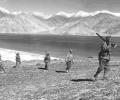
As India and China continue to face off across the Himalayas six decades later, the echoes of that earlier conflict remain unmistakable. The core of China's sensitivity lies not in maps or mountain passes, but in its perception of sovereignty over Tibet, points out Dr Kumar.

'Pakistan is a nuclear country.' 'With the kind of situation that is there in Pakistan today, America will help Pakistan stay afloat.'

The Mumbai police will get another joint commissioner, the sixth such post, to oversee intelligence gathering, including keeping track of sleeper cells, an official has said.

A big question mark is on whether Shashi Tharoor, who had led the delegation to the US among other countries, will be picked as speaker by the Congress, as the seasoned Lok Sabha member's enthusiastic endorsement of the government's action following the terror attack has soured his ties with his party.

The Chinese see no need to fight directly. They have an able and willing proxy in Pakistan, points out Shekhar Gupta.

A meeting with Chinese President Xi Jinping on the sidelines of the SCO summit is being planned.
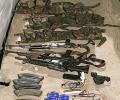
Security agencies have gathered evidence, including Pakistani government documents and biometric data, confirming that the terrorists involved in the Pahalgam attack were Pakistani nationals.

India's top listed real estate developers - DLF, Lodha Group, Prestige Estates, and Oberoi Realty, excluding Godrej Properties - reported strong presales growth in the first quarter (Q1) of 2025-26 (FY26), even as earnings showed a mixed trend. According to Nomura, the top five developers - DLF, Lodha, Prestige, Oberoi, and Godrej - recorded a cumulative 59 per cent year-on-year (Y-o-Y) growth in presales.
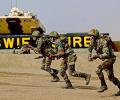
The Indian Army's broader reorganisation is inevitable as India's military doctrine adapts to the demands of the modern battlefield.
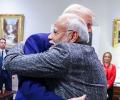
One must wonder whether Mr Modi's efforts to wine and dine the Big Two of today's world were seen as a sign of weakness rather than a proffered arm of friendship, points out R Jagannathan.
The Jammu and Kashmir government has declared the publication of 25 books as forfeited for promoting false narratives and glorifying terrorism. The books include those written by famous authors like Moulana Moudadi, Arundhati Roy, A G Noorani, Victoria Schofield and David Devadas.
India's measures announced against Pakistan on April 23 will remain effective, the sources said.

The Indian Air Force conducted precision strikes on terror hideouts in Pakistan, targeting a Jaish-e-Mohammad communication network housed in a primary health centre in Tehra Kalan village. The communication setup was essential for planning and coordinating activities with infiltrated terrorists in Jammu and Kashmir. The strikes aim to dismantle the communication network and hinder the terrorists' ability to operate.
The blame must be shared by the investigating agencies, the government of the day and the nation at large, points out Colonel Anil A Athale (retd).
The surge in radicalisation has even startled some ex-separatist groups as they are concerned that another religious extremism wave, forced from the other side of the Line of Control, will destabilise the Valley's centuries-old Sufi tradition.

An operation was underway to find if more people were involved in espionage against India and several YouTube channels were under scrutiny, a top Haryana official said on Tuesday after five, including a Youtuber, were nabbed from the state for spying.

The Indian Army's para commandos killed the alleged mastermind of the Pahalgam terror attack, along with two associates, in an encounter near Srinagar.
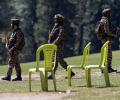
The officials said that intelligence agencies had been alerted about the possibility of a terror attack, but the inputs were utilised at another place, some 90 kilometres away from the site where the attack took place, resulting in a key security lapse.

Asim Malik's shift to the important DG, ISI post comes as something of a surprise now, but it indicates the army chief's confidence in him, notes Rana Banerji, who headed the Pakistan desk at RA&W.

Pakistan is "in an active counterterrorism fight right now and they have been a phenomenal partner in the counterterrorism world", the general said.

The encounter broke out when a joint search party of the army and police launched a search operation, based on a specific intelligence, in remote Bihali area of Basantgarh in the district this morning. Reinforcements have been rushed in and a massive search operation is going on despite bad weather.

There has been intense speculation on whether Tharoor, who led the delegation to the United States among other countries, will be picked as a speaker by the Congress given that his enthusiastic endorsement of the government's action following the terror attack has soured his ties with tge party.

Defence attaches of several major countries who are part of many international groupings, as also of several Islamic countries attended the briefing, sources said.

It said a small group of Khalistani extremists are continuing to use Canada as a base for fundraising and planning of violence primarily in India.
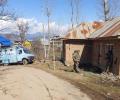
Security agencies are concerned about the increasing use of drones by terror groups in Jammu and Kashmir for surveillance and logistics, replacing human networks.
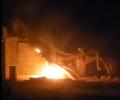
The nine targets struck under 'Operation Sindoor', four in Pakistan and five in Pakistan-occupied-Kashmir, were chosen by the IAF after receiving intelligence inputs about terror camps operating under the guise of health centres to evade detection at these sites, officials said on Wednesday.

The closed-door luncheon meeting came amid escalating tensions between Israel and Iran with Trump exploring Washington's possible involvement.
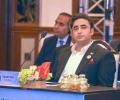
Bhutto, who served as the Foreign Minister earlier, addressed a briefing at the UN Headquarters in New York and sought reconciliation with India, making a plea for talks and Intel sharing between the two neighbours.
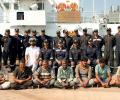
The Indian Coast Guard rescued seven Indian fishermen who were apprehended by the Pakistan Maritime Security Agency (PMSA) in the mid-sea off the Gujarat coast. The incident took place on Sunday when the Coast Guard received a distress signal from an Indian fishing boat operating near the No-Fishing Zone (NFZ). The Coast Guard ship intercepted the PMSA vessel and persuaded personnel on board to release the seven Indian fishermen. The Indian fishing boat, Kal Bhairav, was reportedly damaged and sunk during the incident.
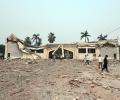
A total of nine terror sites in Pakistan, including five in Pojk, linked to Lashkar-e-Taiba (Let) and Jaish-e-Mohammed (Jem), were targeted with meticulous planning to avoid civilian casualties.

Pakistan's intelligence agency, the ISI, is reportedly using individuals under the influence of drugs or posing as mentally disturbed to infiltrate India and deliver messages to terrorists in prisons. Officials have reported over 10 such cases since July, with individuals entering from Pakistan and Pakistan-occupied Kashmir and being sent to prisons in Jammu, Punjab, and Rajasthan. Security agencies suspect these individuals are couriers tasked with relaying communication to jailed terrorists. The ISI's tactic is believed to be a response to the increased use of technology in communication, which leaves behind electronic footprints. This method of infiltration has also been linked to drug smuggling operations. The ISI's current tactic is reminiscent of its past use of "sawari operators" on the Samjhauta Express for covert operations, which were effectively curtailed by authorities.
'Unfortunately, India and Pakistan could learn a 'lesson' from this conflict that will make them more likely to use these weapons against each other in the future.' 'Rounds of missile and drone attacks could be more routine features of their hostility, just like artillery fire has become a familiar fact of life along the Line of Control.'
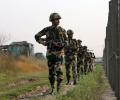
Army troops could not open fire on the terrorists due to the presence of Pakistani posts nearby, they said. Drone footage of the area showed a blood trail, indicating that the terrorists had suffered injuries due to the fall.
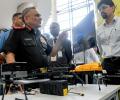
Chief of Defence Staff General Anil Chauhan emphasizes the importance of self-reliance in Unmanned Aerial Vehicles (UAVs) and Counter-Unmanned Aerial Systems (C-UAS) for India, citing recent global conflicts and Operation Sindoor as examples of their strategic importance.
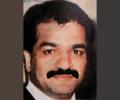
A special court in Mumbai has ordered the transfer of 14 properties belonging to Tiger Memon, an alleged mastermind of the 1993 Mumbai serial bomb blasts, and his family to the central government. The properties, which were in the possession of the Bombay High Court's receiver since 1994, were forfeited under the Smugglers and Foreign Exchange Manipulators (Forfeiture of Property) Act (SAFEM) after proceedings initiated against Memon in 1993 based on a detention order issued by the Maharashtra government. The properties include a flat in Bandra, an office in Mahim, a plot in Santacruz, and several other properties across Mumbai.

More than 118 Pakistani forward posts and their surveillance system were completely destroyed by the BSF during Operation Sindoor, dealing a major blow to the neighbouring country, Union Home Minister Amit Shah said on Friday.
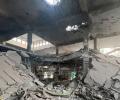
'This operation was a culmination of such long (period) of efforts, and gives us satisfaction that whatever we have been doing, we have been doing correctly'
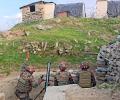
'With a military-led strategy to counter terrorism emanating from Pakistan, India has clearly signalled that it would respond decisively to future terrorist threats.'
